
Midland is the oldest ground we work on regularly, and it's the suburb where the moisture test earns its keep. A lot of what we quote here was poured decades before an under-slab membrane was a requirement — which changes what has to happen before any coating goes down.
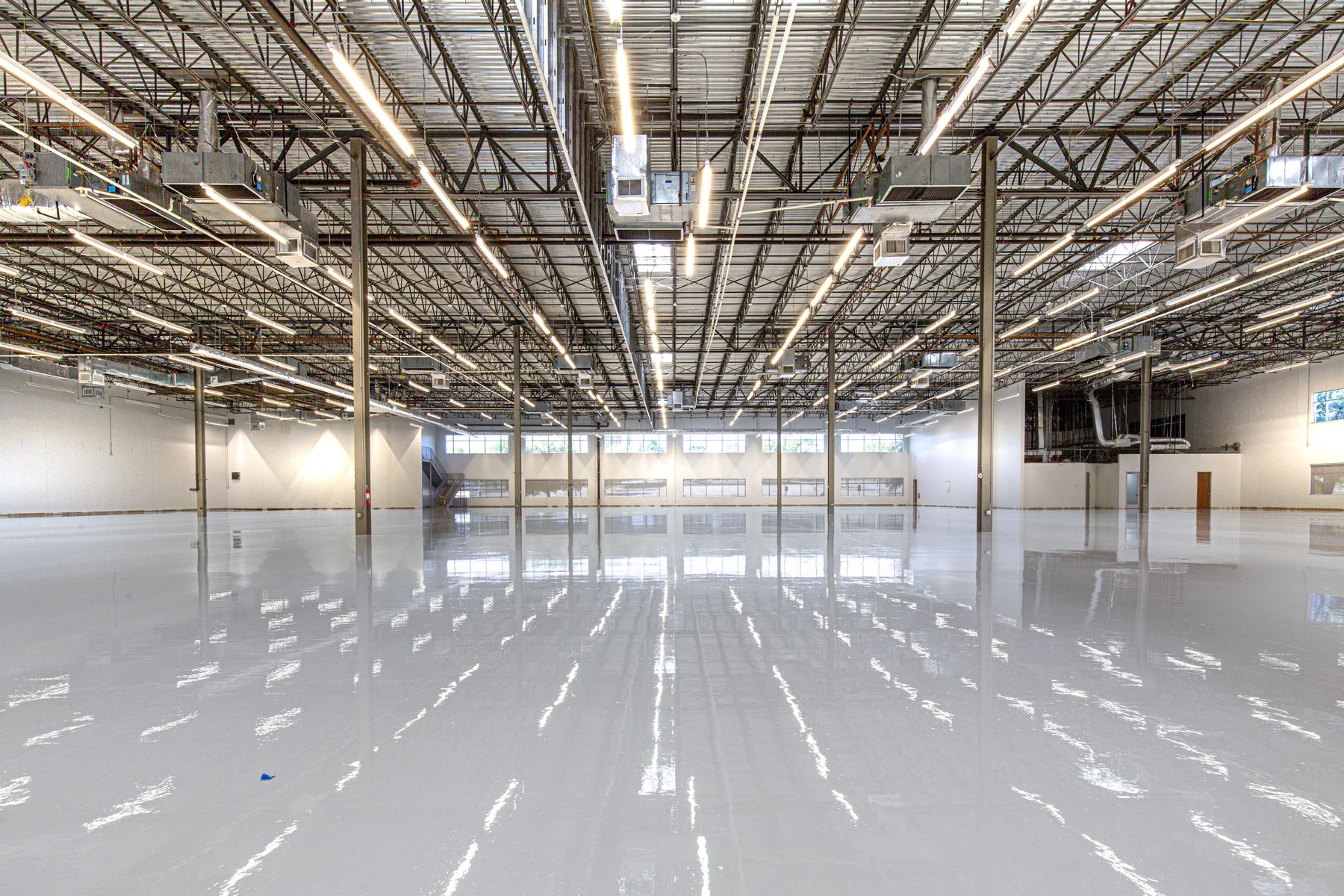
Floor shown is a visualisation — stock reference photography, not a completed Ironstone Floors job.
Midland sits at the eastern edge of the Swan Coastal Plain, near the foot of the Darling Scarp and close to the Swan River's alluvial country. That's a different foundation story to the coastal sand suburbs: alluvial clays and mixed soils are part of the picture here, and reactive ground moves with the seasons. As always, your lot's classification comes from a soil test on that lot rather than from the suburb — but in Midland we come expecting to look at cracking properly.
Age is the bigger factor though. Midland is a genuinely old town by Perth standards — a railway workshops town with housing stock running from the early twentieth century through the post-war decades, alongside newer redevelopment. A large share of that predates the 1996 Building Code of Australia, which is when a vapour barrier under a slab-on-ground became a prescriptive national requirement. Where there's no intact membrane, moisture travels up through the slab, and sealing it in means hydrostatic pressure pushes the coating straight back off.
That's why we moisture test before a drop goes down, and in Midland the test genuinely changes the answer more often than anywhere else we work. Sometimes it means a different system. Occasionally it means we tell you the slab isn't a candidate. We'd rather lose the job than write a guarantee against a slab we know is pushing.
The other Midland reality is that a lot of these garages weren't originally garages. Converted carports, added lean-tos, slabs poured in two pours twenty years apart with a cold joint down the middle. None of that stops a floor being done well — but it all has to be found before the quote, not on the morning. One clear photo of the whole floor tells us most of it.
Early twentieth century through the post-war decades, plus newer redevelopment around the town centre.
An older single around 18–20 m², or a double nearer 30–32 m² — noticeably tighter than a modern 36 m² double. Plenty of converted carports.
Pre-Code pours with no reliable vapour barrier, cold joints, decades of oil, and a moisture reading that actually decides the job.
Same four stages on every job in Midland, residential or commercial. No shortcuts, because we're the ones carrying the guarantee.
Diamond-ground back to bare, open concrete. Not acid-etched, not rolled over. Dust-extracted, so the garage stays clean.
Moisture tested before a drop goes down. Cracks and joints are cut out and filled so they don't telegraph through the finish.
Pigmented base coat, then decorative flake broadcast to refusal for full coverage, grip and depth. Your colour, chosen before we arrive.
Clear coat over the top, edges cut in sharp, site cleaned. You get the guarantee in writing before we leave.
One day on site. Car back on it the next morning. Gear moved and put back — you don't lift a thing. Written guarantee against lifting, and it transfers if you sell.
Midland's older streets are tighter than the estates we work in up north — narrower verges, less driveway, and sometimes a rear-lane access. It's all workable, but it's worth a photo of the approach as well as the floor so we bring the right setup.
Power needs checking more carefully here than anywhere else on our list. Older Midland garages sometimes have no outlet at all, or one on a very old shared circuit. Assume we need to bring our own supply and tell us if there's any doubt.
If your property is in a heritage area, coating the inside of a garage floor isn't an external alteration and isn't normally a planning matter. If you're unsure whether your property is affected, check with the City of Swan before booking — it's a five-minute question and it's yours to ask, not ours to assume.
Age on its own doesn't rule a slab out — plenty of old Midland slabs coat beautifully once they're ground open. What rules a slab out is moisture coming up through it, which is more likely on a pre-1996 pour because there may be no intact vapour barrier under it. That's exactly what the moisture test is for, and it happens before you commit to anything.
We tell you, and we tell you straight. Depending on the reading it may mean a different system, or it may mean the floor isn't a candidate at all. We won't coat over a slab that's pushing and write a guarantee against it — that's a floor that fails in a year and a customer who's rightly furious.
It's usually a cold joint from a second pour, and it's very common in garages that were extended or converted. It gets treated as part of the preparation — cut out, filled and bridged so it doesn't telegraph through the finish. Point it out in the photo you send and we'll price it properly rather than discovering it on the day.
More general questions are answered on the main FAQ.
One photo and rough dimensions is all we need to give you a real number — no site visit required. Quotes weekdays 7am–7pm.
Get my price →