
Clarkson is where Perth's northern corridor got going properly — most of it went in from the late 1990s through the 2000s. Those slabs are now old enough that whatever went on top of them the first time is due for a second opinion.
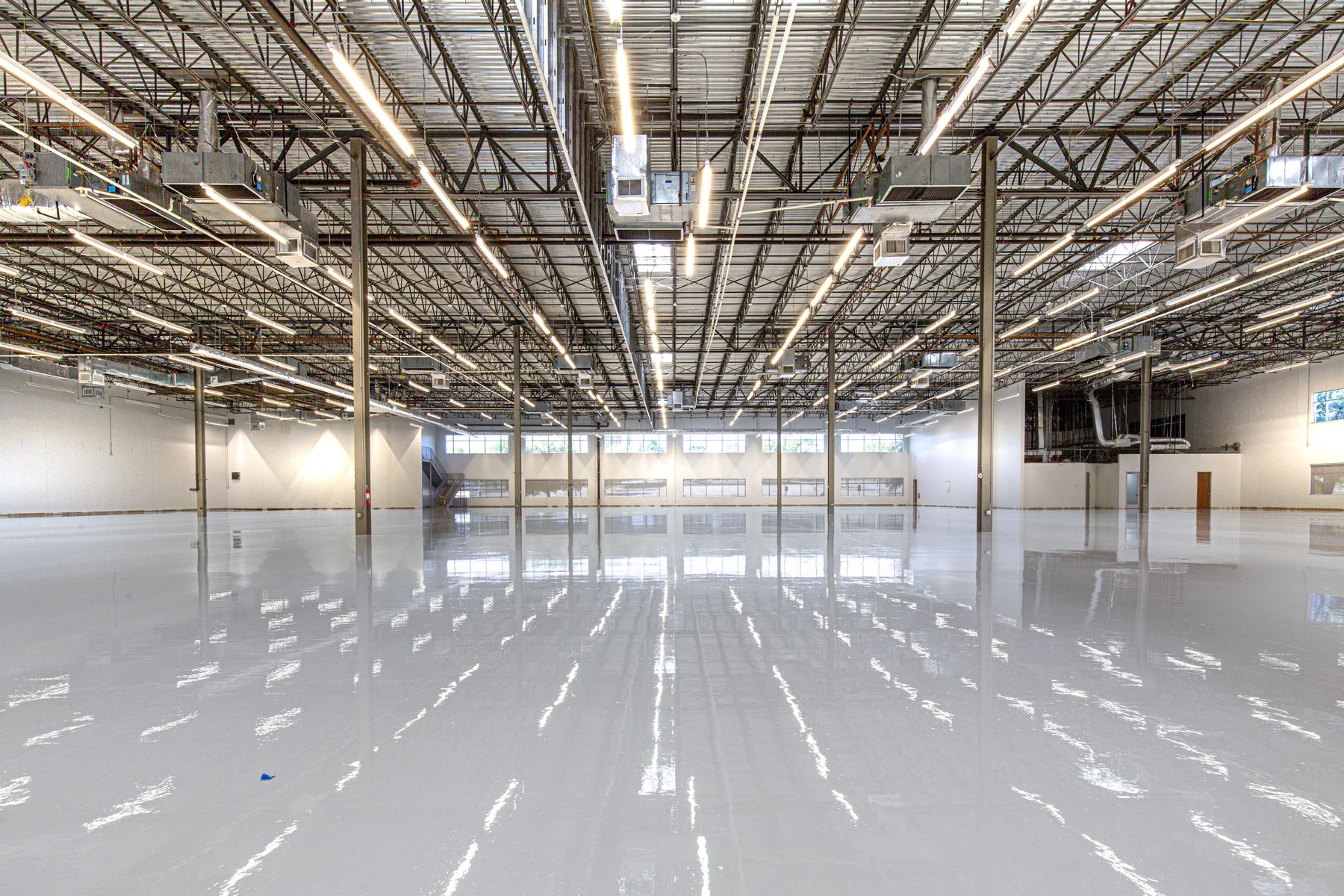
Floor shown is a visualisation — stock reference photography, not a completed Ironstone Floors job.
Like the rest of the northern corridor, Clarkson is founded on coastal-plain sand. Structurally that is the easy version of this job: sand is largely non-reactive, so we rarely find the seasonal cracking that comes with reactive clay, and the slabs generally sit still. Site class is still a per-lot question answered by a soil test, not a suburb-wide fact — but the pattern across Clarkson is consistent.
What makes Clarkson different from Butler up the road is age. A late-1990s or early-2000s slab has had twenty-odd years of tyres, oil, and at least one coat of something. That 'something' is the job. Hardware-store paving paint and single-pack DIY kits were everywhere in that era, and they were rolled onto slabs that had been swept, maybe acid-etched, and called prepared. Acid does not open concrete anywhere near enough for a coating to bond. Two decades on, those floors are lifting.
The vapour-barrier question is a real one at the older end of Clarkson. The prescriptive national requirement came in with the 1996 Building Code of Australia, so the earliest Clarkson slabs sit right on that boundary. Where there's no intact membrane, moisture moves up through the slab and pushes a coating back off — that's hydrostatic pressure, and no amount of surface prep beats it. We moisture test before a drop goes down, and in older Clarkson the reading occasionally changes what we do.
One more thing we see here and across the northern suburbs: bore water staining. Perth reticulation running off iron-rich bore water leaves the familiar orange staining on concrete, and where a retic head throws onto a driveway or into an open garage it stains the slab. It's cosmetic, it grinds off with the rest, and it's worth mentioning in the photo you send us.
Late 1990s through the 2000s, with the earliest sections sitting either side of the 1996 Building Code change.
A double lock-up around 32–36 m², integral to the house, often with a separate powered shed or patio slab out the back.
Failing single-pack DIY coatings, hot-tyre lifting where the car turns, oil staining, and bore-water rust marks near the door.
Same four stages on every job in Clarkson, residential or commercial. No shortcuts, because we're the ones carrying the guarantee.
Diamond-ground back to bare, open concrete. Not acid-etched, not rolled over. Dust-extracted, so the garage stays clean.
Moisture tested before a drop goes down. Cracks and joints are cut out and filled so they don't telegraph through the finish.
Pigmented base coat, then decorative flake broadcast to refusal for full coverage, grip and depth. Your colour, chosen before we arrive.
Clear coat over the top, edges cut in sharp, site cleaned. You get the guarantee in writing before we leave.
One day on site. Car back on it the next morning. Gear moved and put back — you don't lift a thing. Written guarantee against lifting, and it transfers if you sell.
Clarkson is an easy run and the estate layout is generous — parking the truck and running an extractor from the driveway is rarely the hard part.
Power is the usual thing to check. Garages from this era often have one 10-amp outlet on a shared circuit, which a planetary grinder and a vacuum will trip. Tell us at quote stage and we bring our own supply.
If you've got a separate rear shed you want done at the same time, say so when you send the photo. Getting a grinder down a side access is usually fine, but it changes the day, and it's cheaper to do both on one visit than to come back.
It comes off. Single-pack DIY kits from that era were rolled onto slabs that had been swept or acid-etched at best, so the bond was weak from day one. We diamond grind the whole lot back to bare, open concrete and start again — that's the only surface a written guarantee against lifting can be written on.
Almost certainly bore water. Perth reticulation running off an iron-rich bore leaves that distinctive rust-orange staining on concrete, and where a retic head throws into an open garage it marks the slab. It's cosmetic and it grinds off with everything else — it doesn't affect the coating.
More often than the newer estates further north, yes. The prescriptive requirement for an under-slab vapour barrier came in with the 1996 Building Code, and the earliest Clarkson slabs sit near that line. We moisture test every slab before coating. If the reading is high we tell you what it means rather than coating over it and hoping.
More general questions are answered on the main FAQ.
One photo and rough dimensions is all we need to give you a real number — no site visit required. Quotes weekdays 7am–7pm.
Get my price →