
Butler is almost entirely a post-2008 suburb, so we're usually working on a young, well-built slab. That changes the job — less remediation, more attention to finish, and a garage that's often doing a second job as a gym, a workshop or somewhere to put the boat.
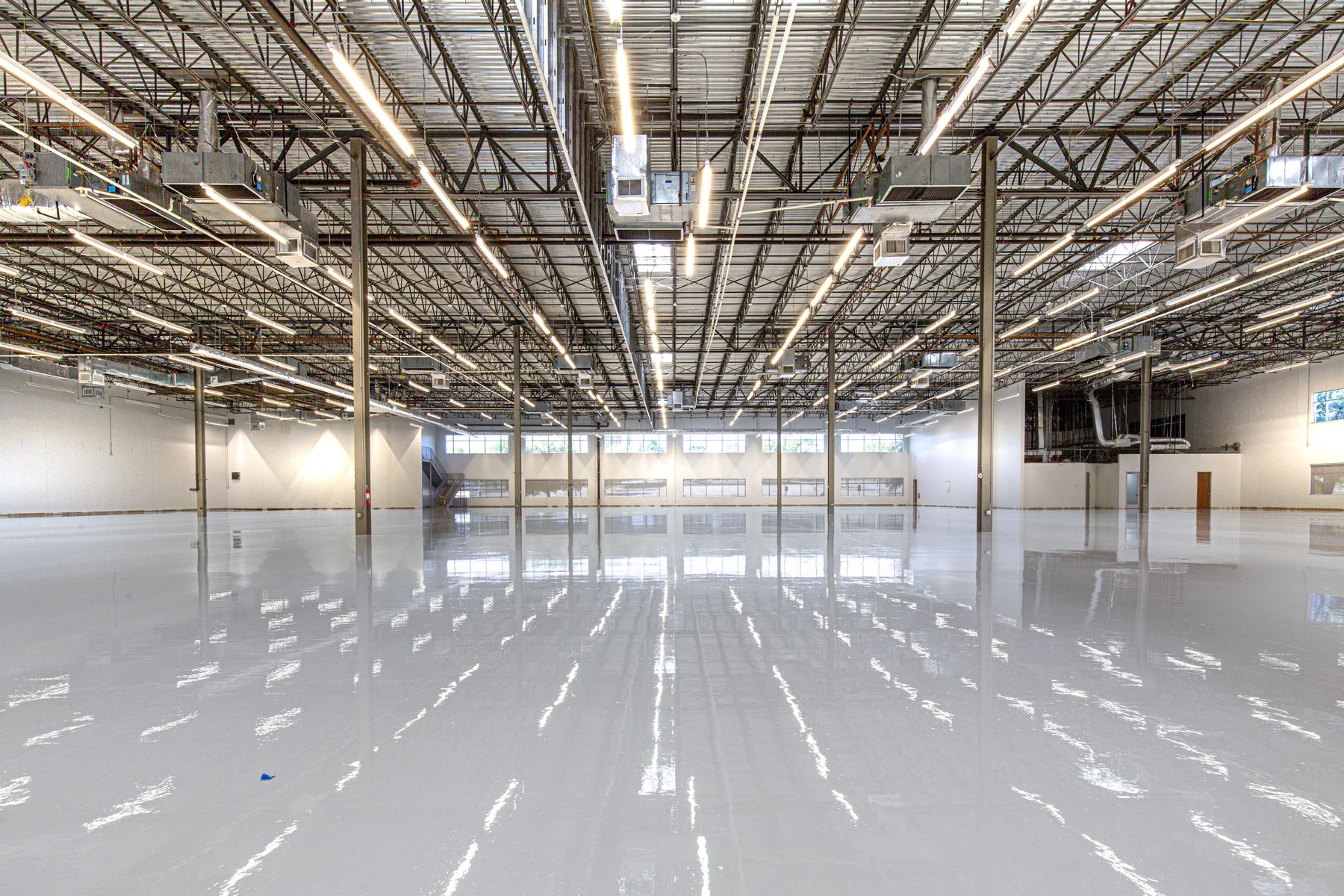
Floor shown is a visualisation — stock reference photography, not a completed Ironstone Floors job.
Butler is coastal-corridor sand, near the northern end of Perth's Swan Coastal Plain dune country. The slabs are young — most of Butler was built out from the late 2000s onward — and they were poured under the current Building Code, which means an intact under-slab vapour barrier is the norm rather than the exception. We still moisture test, because a guarantee written on an assumption isn't a guarantee, but in Butler the test usually confirms what we expect.
Sand founding also means very little reactive movement. You do not typically see the seasonal cracking here that you'd find on clay. What you do see, on a slab this young, is a hard steel-trowelled surface — a dense, closed finish that looks lovely and gives a coating almost nothing to hold on to. That surface is exactly why the diamond grind is non-negotiable on a new floor. People assume a new slab needs less prep. It needs the same prep, for a different reason.
The genuinely local hazard in Butler is windborne sand. In an estate with lots still being built out, and a strong afternoon sea breeze off the coast, fine sand travels. Sand that lands in a wet base coat doesn't brush off later — it becomes part of the floor. We manage it by sequencing the day and screening the opening, and it's a real reason to book the coat for the morning rather than the afternoon.
The last Butler-specific thing is what the garage is used for. A lot of these are the spare room — home gym, workshop bench, second fridge, the boat or the caravan. That changes what we recommend: heavier film build where weights get dropped, and a flake blend that hides tyre marks and dropped-tool scuffs rather than showing every one of them.
Late 2000s onward — most of Butler was built out after the northern rail extension, with the newest lots still going in.
A 6 × 6 m double around 36 m², integral under the main roof, often with a shopper's entry into the house.
A sound, young slab with a hard steel-trowelled surface that has to be ground open, plus windborne estate sand to work around on the day.
Same four stages on every job in Butler, residential or commercial. No shortcuts, because we're the ones carrying the guarantee.
Diamond-ground back to bare, open concrete. Not acid-etched, not rolled over. Dust-extracted, so the garage stays clean.
Moisture tested before a drop goes down. Cracks and joints are cut out and filled so they don't telegraph through the finish.
Pigmented base coat, then decorative flake broadcast to refusal for full coverage, grip and depth. Your colour, chosen before we arrive.
Clear coat over the top, edges cut in sharp, site cleaned. You get the guarantee in writing before we leave.
One day on site. Car back on it the next morning. Gear moved and put back — you don't lift a thing. Written guarantee against lifting, and it transfers if you sell.
Butler is a straightforward run up the freeway for us, and access in the estates is easy — wide streets, big driveways, and room to work.
The scheduling constraint here is the sea breeze rather than the traffic. Butler is close enough to the coast that the afternoon south-westerly is reliable and strong through summer. We start early on Butler jobs so the base coat and the flake broadcast are done before the wind gets up, and we screen the door opening while it goes off.
If your estate is still under construction, tell us at quote stage. Sites next to an active build have more airborne dust and sand, and occasionally a verge full of somebody else's materials — both are workable, both are better known in advance than discovered on the morning.
Yes, and it's the question we get most often out here. A new slab has a hard, closed, steel-trowelled surface — dense and smooth, with effectively no profile for a coating to key into. New concrete needs grinding just as much as old concrete; the reason is different, but the answer is the same. Anything rolled onto an untouched trowelled surface is sitting on top of it, not bonded into it.
It's the one genuinely local thing we plan around. Airborne sand landing in a wet coat becomes part of the floor. So on Butler jobs we grind first, coat early, and screen the opening while it goes off. It's a scheduling decision, not a reason to avoid the job.
Tell us at quote stage and we'll spec it accordingly — heavier film build in the drop zone and a flake blend that hides marks. A resin floor is much tougher than bare concrete, but a dropped Olympic plate is a point impact, and it's fairer to say that up front than to write a guarantee that pretends otherwise. Rubber where the bar lands is still the right call.
More general questions are answered on the main FAQ.
One photo and rough dimensions is all we need to give you a real number — no site visit required. Quotes weekdays 7am–7pm.
Get my price →