
Joondalup is a planned city, and it shows in the slabs. Most of what we quote here went down between the late 1980s and the mid 2000s — young enough to be sound, old enough that the floor paint someone rolled on in the 2000s is now letting go.
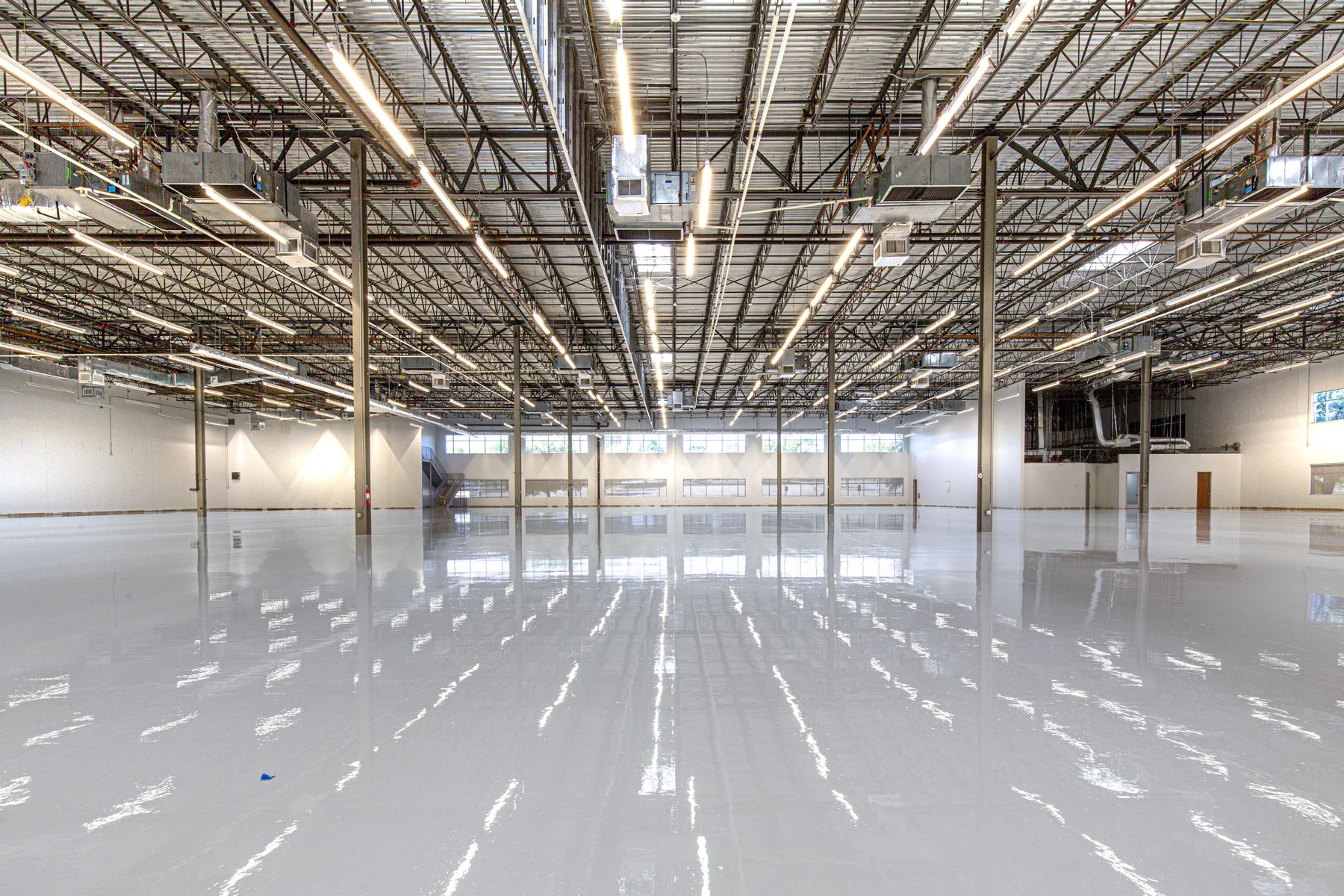
Floor shown is a visualisation — stock reference photography, not a completed Ironstone Floors job.
Joondalup sits on the Swan Coastal Plain, on the sand dune systems that run north–south between the coast and the Darling Scarp. In practice that means most Joondalup slabs are founded on sand rather than clay. That is genuinely good news and it is worth understanding why: sand is largely non-reactive, so you do not get the seasonal heave-and-shrink cycle that cracks slabs in clay country. A well-poured Joondalup slab tends to stay where it was put. Your own lot's site classification still comes from a soil test on that lot, not from the suburb — but as a rule we find less structural movement here than the eastern suburbs.
Because movement is rarely the problem, the deciding factor on a Joondalup floor is almost always preparation. There is no reactive clay to blame when a coating lifts. If it lifts here, it lifted because it was rolled onto a sealed or acid-etched slab with nothing to key into. That is why every job starts with a diamond grind back to bare, open concrete.
Age matters for the second question, which is moisture. An under-slab vapour barrier only became a prescriptive requirement nationally with the 1996 Building Code of Australia. Most of Joondalup's housing is newer than that, so the odds are in your favour — but 'the odds' is not a basis for a written guarantee. We moisture test before a drop goes down regardless. The older pockets around Joondalup's original 1980s subdivisions are where the test occasionally changes the answer.
The other Joondalup constant is old floor paint. A lot of these garages got a tin of hardware-store paving paint at some point, usually when the house was being tidied for sale. It is almost always lifting now, and almost always first in the arc where the car turns. It does not get coated over — it gets ground off, back to bare, open concrete.
Late 1980s through to the mid 2000s, with newer infill around the city centre and Edgewater.
A double lock-up around 34–36 m², usually integral to the house under the main roof, plus a fair number of powered rear sheds.
Lifting floor paint, hot-tyre marks where the car turns, and a sound sand-founded slab underneath it that takes a coating well once it's ground open.
Same four stages on every job in Joondalup, residential or commercial. No shortcuts, because we're the ones carrying the guarantee.
Diamond-ground back to bare, open concrete. Not acid-etched, not rolled over. Dust-extracted, so the garage stays clean.
Moisture tested before a drop goes down. Cracks and joints are cut out and filled so they don't telegraph through the finish.
Pigmented base coat, then decorative flake broadcast to refusal for full coverage, grip and depth. Your colour, chosen before we arrive.
Clear coat over the top, edges cut in sharp, site cleaned. You get the guarantee in writing before we leave.
One day on site. Car back on it the next morning. Gear moved and put back — you don't lift a thing. Written guarantee against lifting, and it transfers if you sell.
Joondalup is an easy run for us. Wide verges, generous driveways and estate streets with room to park a truck and run a vehicle-mounted dust extractor without blocking anybody in.
The thing worth checking before the day is power. Plenty of Joondalup garages have a single 10-amp outlet sharing a circuit with the laundry, and a planetary grinder plus a vacuum will trip it. Tell us at quote stage and we bring our own supply rather than finding out at 7am.
Second thing, and it is a Perth-wide one: the sea breeze. From about midday through summer the south-westerly comes through hard, and a garage with the roller door up on a west-facing street will collect airborne sand on a wet coat. We plan the day around it — grinding in the afternoon, coating early — rather than pretending it isn't happening.
No — and nobody honest will. A coating is only ever as sound as what it's stuck to, so if the old paint is letting go, anything laid over it lets go with it. We grind the paint off and take the slab back to bare, open concrete. That's what the written guarantee against lifting is written against.
Usually, structurally, yes — sand is largely non-reactive, so you don't get the seasonal movement that cracks slabs in clay country, and we generally find Joondalup slabs sound. But sand says nothing about the surface. A coating fails at the bond, not in the sub-base, so the slab still has to be diamond-ground open and moisture tested before anything goes on it.
Yes. A standard double is comfortably one day on site, and the car goes back on it the next morning. We move your gear and put it back, so you don't have to empty the garage the night before.
More general questions are answered on the main FAQ.
One photo and rough dimensions is all we need to give you a real number — no site visit required. Quotes weekdays 7am–7pm.
Get my price →