
Ellenbrook is the one northern-corridor suburb where we don't assume sand. It sits off the coastal dune country, on the eastern side of the plain near the Swan Valley — and that changes what we look for before we quote.
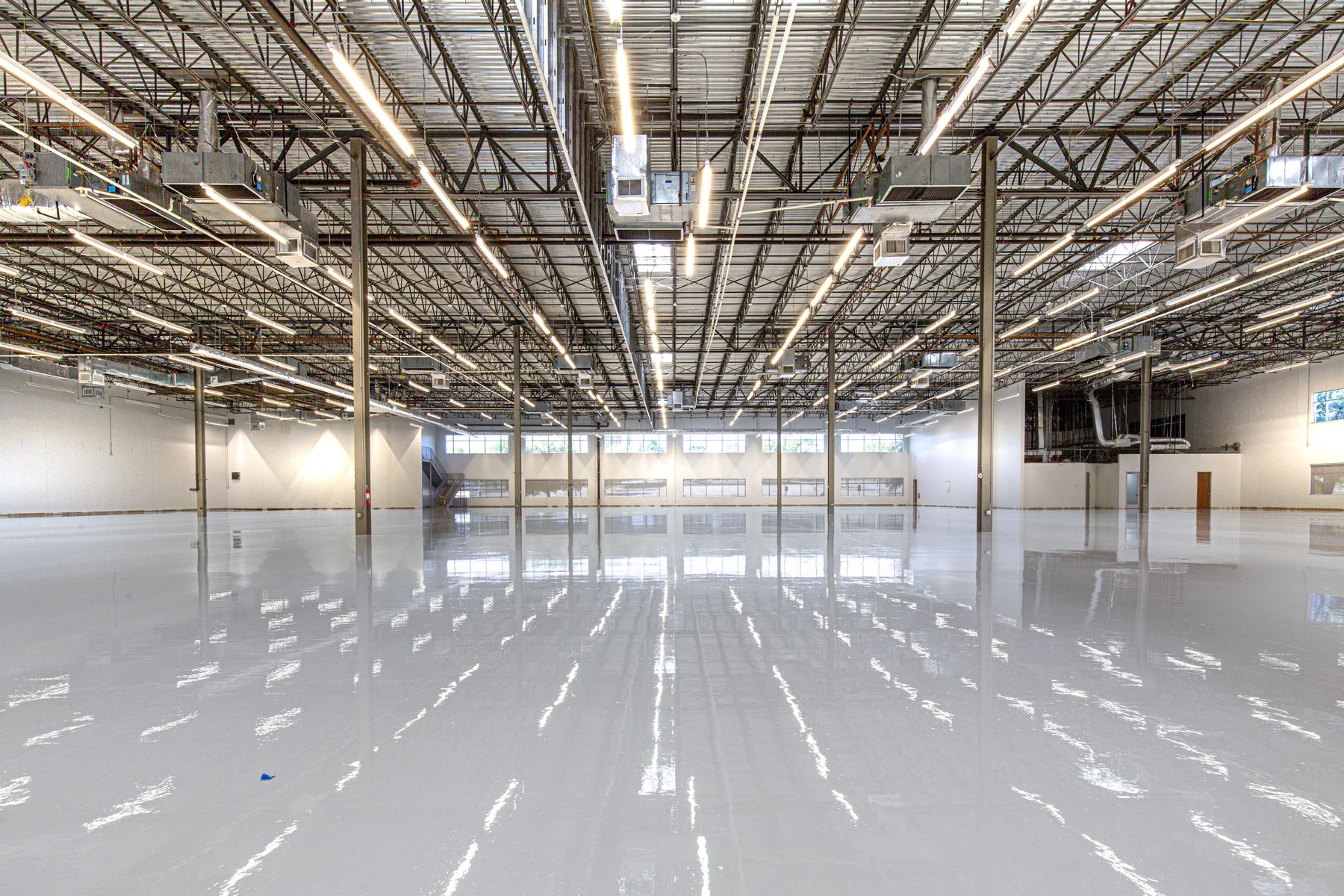
Floor shown is a visualisation — stock reference photography, not a completed Ironstone Floors job.
This is the important local difference, and it's worth spelling out. Most of Perth's growth corridors sit on the coastal dune sands, where the ground is largely non-reactive. Ellenbrook sits further east, toward the alluvial country of the Swan Valley and the Pinjarra Plain, where clays and mixed alluvial soils are part of the picture. Reactive clay moves with the seasons, and a slab founded on it lives with that movement. Your own lot's classification comes from a soil test on that lot — the suburb doesn't decide it — but we come to Ellenbrook expecting to look harder at cracking than we would in Butler.
For a coating, movement matters in one specific way: cracks. A live crack that keeps working will eventually telegraph through a rigid coating, so we treat them properly — cut out, filled and bridged as part of stage two — rather than skimming over them and hoping they stay quiet. If we think a crack is structural rather than cosmetic, we say so at quote stage. That's a conversation worth having before the money's spent, not after.
Age across Ellenbrook is mixed, which is unusual for a growth suburb. The original village dates to the mid-1990s and the newer precincts are still going in, so on any given week we might be on a twenty-five-year-old slab in the morning and a two-year-old one in the afternoon. The older end predates or straddles the 1996 Building Code change that made an under-slab vapour barrier a prescriptive requirement, so we moisture test before a drop goes down and let the reading decide.
The Swan Valley being next door has one practical consequence worth mentioning: a lot of Ellenbrook garages have a trailer, a ute or a work vehicle in them, and the floors show it. Oil, diesel and hydraulic staining are common here, and contamination has to be degreased and ground out rather than coated over — oil in the slab will fight the bond.
Mid-1990s through to brand new — Ellenbrook has been building out continuously, so the stock is genuinely mixed.
A double around 36 m², plus a high proportion of separate powered sheds and oversized garages built for a trailer or a boat.
Cracking that needs cutting out and bridging properly, oil and diesel contamination, and older slabs where the moisture reading genuinely changes the plan.
Same four stages on every job in Ellenbrook, residential or commercial. No shortcuts, because we're the ones carrying the guarantee.
Diamond-ground back to bare, open concrete. Not acid-etched, not rolled over. Dust-extracted, so the garage stays clean.
Moisture tested before a drop goes down. Cracks and joints are cut out and filled so they don't telegraph through the finish.
Pigmented base coat, then decorative flake broadcast to refusal for full coverage, grip and depth. Your colour, chosen before we arrive.
Clear coat over the top, edges cut in sharp, site cleaned. You get the guarantee in writing before we leave.
One day on site. Car back on it the next morning. Gear moved and put back — you don't lift a thing. Written guarantee against lifting, and it transfers if you sell.
Ellenbrook is a longer run for us than the coastal corridor, so we tend to schedule it as a full day rather than squeezing it around another job. That's better for you anyway — there's no incentive to rush the grind.
Access in the estates is easy. The older village streets are tighter, and if you're on a narrow verge or a shared driveway, a photo of the approach along with the garage photo saves everybody a phone call.
Power is the standard check: one 10-amp outlet on a shared circuit won't carry a planetary grinder and a vacuum. Tell us at quote stage and we bring our own supply.
Usually yes, and cracks are normal on this side of the plain. They get cut out, filled and bridged as part of the preparation, not skimmed over. What we won't do is coat over a crack we think is structural and still moving — if that's what we find, we tell you at quote stage rather than after you've paid for a floor that's going to telegraph.
Generally yes, and it's the reason this page reads differently to the Butler one. The coastal corridor is dune sand and largely non-reactive. Ellenbrook sits further east toward the Swan Valley's alluvial country, where clays are part of the mix and seasonal movement is more of a factor. Your own lot is classified by a soil test, not by the suburb — but it changes what we expect to find.
It's a real one, and it's common in Ellenbrook where a lot of garages hold a work vehicle. Oil in the concrete fights the bond. It gets degreased and then ground out — and where contamination is deep, we grind further rather than coat over it. If a patch is beyond saving we'll tell you before we start, not after.
More general questions are answered on the main FAQ.
One photo and rough dimensions is all we need to give you a real number — no site visit required. Quotes weekdays 7am–7pm.
Get my price →